Politics
One Nation’s resurgence explained
Is One Nation’s newfound prominence a flash in the pan? Research suggests it is something more substantial.
One Nation’s run of success – in the South Australian election, and its strong showing in the Nepean by-election in Victoria – has posed two questions for policymakers, political researchers and party strategists:
Is this success simply an opportunistic vote against established parties by people doing it tough economically, or is it a more solid political movement?
If it is a more solid movement, what are the concerns that bring people together to support One Nation?
Nicholas Biddle and Matthew Gray of ANU cover these questions in a paper which builds on and updates work by the same researchers linked in the roundup of 25 April. This more recent paper is based on surveys in late March, and is specifically concerned with finding what drives voters’ behaviour when there are five parties (and independents) competing for support, One Nation being the addition to that field of parties.
Their conclusion addresses the first question. They find that One Nation’s support is something more substantial than an opportunistic protest vote:
… these findings suggest that the current rise in One Nation support reflects an internally coherent attitudinal configuration rather than a simple protest response to economic conditions, though financial stress remains an important contributing factor.
Along the way they look at voters’ conflicting attitudes to tax and public spending, and their attitudes to the reach of government, essentially asking voters whether they want “small government” or “big government”.
On attitudes to tax and public spending they confirm the “well-documented paradox”, that people believe public debt and taxes are too high, while they seek to see more public spending in most areas.
Such is almost always the case in democracies, but shifts in those beliefs are revealing. They find that over the last 7 years the percentage of people who believe their income taxes are too high has risen – from 39 percent to 56 percent. They conclude that this shift is due to increasing financial stress generally, rather than actual changes in income tax rates or bracket creep.
On the reach of government they survey public attitudes to 13 possible responsibilities of government, covering most areas of government spending and regulation. They find that those who believe the government should have a strong role in one area generally believe that the government should also have a strong role in others. For example if you believe the government should have a strong responsibility to provide health care you will probably also believe that it should have strong laws and regulations to protect the environment.
This finding aligns with the traditional idea of a left-right spectrum of political views. Those who support parties generally classified as on the “left” tend to have a strong belief in state capacity, while those who support parties on the right tend to believe that governments are intrinsically incompetent and inefficient.
They note that the function described as “control who enters Australia’s borders” tops the list, at 95 percent. (But who else other than government would we expect to control the borders?)
They also survey, on a 10-point scale, our views towards political parties. For the Liberal, Labor, National and Green parties, our general attitudes tend to be either neutral (5 on the scale) or “strongly dislike” (0 on the scale). Our attitudes to One Nation, however, are somewhat different, because while very few give the established parties a “strongly like” rating (10 on the scale), 12 percent of those surveyed give this positive rating to One Nation. One Nation has captured the affection of a bloc of voters in a way that the Nationals, Liberals, Labor and the Greens haven’t. (Or is it the Hanson-Joyce duo that has captured that attention?)
So what explains that attraction? Among One Nation supporters the researchers find what they (and others) call a “populist” orientation. One Nation’s supporters want a government that enforces strong border controls, and has far less involvement in environmental management – most specifically in relation to policies to do with climate change. Although One Nation supporters tend to be among the country’s most disadvantaged, they do not show enthusiasm for policies that help the unemployed and for policies around other transfer payments.
That describes the policy priorities of One Nation supporters, confirming a general impression of that party’s policies. But what are the beliefs and attitudes that lead to these priorities? The ANU researchers look at scholarly descriptions of populism, finding that the following fits what their research describes about One Nation supporters:
… support for authoritarian-populist parties is driven principally by a cultural backlash among older, less educated, and non-metropolitan voters whose values and worldview have been progressively marginalised by the long-run shift toward post-materialist priorities in mainstream politics.
This orientation is more prevalent among men than women, among those without post-secondary education, and among people living in non-metropolitan regions.
Note that these are conditions associated with support for One Nation, rather than causal factors. Biddle and his colleagues find that while socioeconomic conditions such as education, wealth and income may have some causal effect, what carries the strongest predictive power is a “scepticism about whether government serves ordinary people”.
Reviewing all the evidence, they conclude:
Taken together, the evidence suggests that the rise in One Nation support in March 2026 should not be understood as a short-term protest response to cost-of-living pressures alone. Rather, it reflects an attitudinal configuration combining financial strain, low hope, scepticism about government capacity, disengagement from environmental concerns, and a pronounced populist orientation.
Tests of One Nation support
Three by-elections and a coming state general election test the strength of voters’ support for One Nation, and have prompted a panic in the Liberal Party.
The rise of One Nation in opinion polls, and in the South Australian election and the Nepean by-election in Victoria, has the political classes asking whether this is a protest against the hitherto dominant parties, particularly among those experiencing stressed financial conditions, or if it is some more solid attachment around the party’s values.
The preceding post tends to confirm the latter view.
As ANU have researchers noted, and as is revealed in the South Australian election and in the Nepean by-election, the electorate’s level of education, or more specifically the absence of post-school education, fits pretty well with a simple linear equation that correlates with the primary vote for One Nation.
In the roundup of 18 April I referred to my own calculations, in which I tested various levels of education attainment against One Nation’s vote, and found that university education gave an even tighter correlation than “post-school” education. (The coefficient of correlation, R squared, is 0.85.)
That equation fitting that relationship is:
Primary percentage support for ON = 36.1 percent – 0.71 X
where X is the percentage of the electorate with a university degree – bachelor or higher.
That means in an electorate where no one has a degree, we would expect One Nation’s primary support to be about 36 percent. Each one percent of the electorate with a degree brings that support down by 0.7 percent. We can see how it fits into by-elections and Victoria’s next state election.
The Nepean by-election – Liberals lose ground but hold on
Thus, when we plug 17.2 percent as the value of X percent – representing the proportion of the population in the Nepean electorate with at least a bachelor degree, the equation suggests that One Nation’s primary vote is around 23.9 percent. This aligns closely with the actual by-election outcome of 24.7 percent primary vote for One Nation.
In fact using a similar but slightly different equation – based on school completion rather than university degrees – William Bowe has applied the South Australian results to look at the Nepean electorate from a fine-grained perspective. Education is the variable that most accurately maps on to support for One Nation in the different areas within this diverse outer-metropolitan electorate.
As it turned out, the Liberal candidate won the seat with 38.5 percent of the primary vote, but they are surely spooked by the strong performance of One Nation, a first-time independent, and the Greens, who won 24.7 percent, 21.3 percent, and 9.3 percent, respectively. That was once a blue-ribbon Liberal seat: in the 2022 state election it achieved 48.1 percent of the primary vote, and 56:44 on the TPP outcome.
The Stafford by-election – One Nation avoids a strong Labor seat
This ability to find a simple variable – education in this case – to estimate support for One Nation hints at a reason why One Nation is not running in the Stafford state by-election in Brisbane, an urban seat described by pollster Kos Samaras as one that Labor should hold comfortably. Samaras notes that the electorate has a high proportion of renters, young people, and university graduates.
Nine candidates are contesting the by-election, to be held next Saturday May 16. Labor, the LNP, the Greens are on the ticket, but not One Nation.
For that electorate X = 30.4 percent, suggesting One Nation’s primary vote would be around 14.5 percent. That would not fit their attempt to present themselves as an up-and-coming party. It’s wise to avoid reminding the 19 million Australians who live in capital cities that One Nation’s constituency is not in those cities.
The Farrer by-election – today’s contest between an independent and One Nation
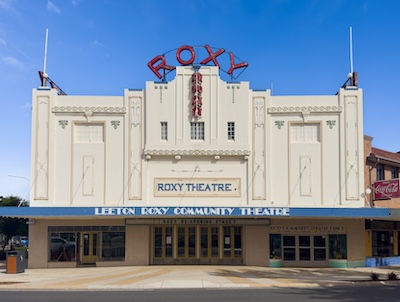
Art deco in Farrer
The equation helps to explain why pollsters are tipping that One Nation’s primary vote will be high in today’s Farrer federal by-election. Only 11.6 percent of the electorate has a bachelor degree or higher, suggesting One Nation’s primary vote will be 27.9 percent.
That does not assure One Nation of victory, however. It is one of three parties standing on a far-right populist platform, the others being the Liberals and the Nationals.
Those disinclined to vote for the extreme right can vote Green, but their vote in 2015 was only 5 percent. A more attractive choice is the strong independent, Michelle Milthorpe, vying for the votes of those who understand the policy weakness of the One Nation, Liberal and National parties.
She won 20 percent of the vote in her first run in 2015, up against the “moderate” Liberal sitting member Sussan Ley. She will surely do much better when there is no other serious centre-right candidate. That is why most media commentators expect the final contest to be between Milthorpe and One Nation. One Nation has been given a boost by the Liberals and Nationals who have put One Nation ahead of Milthorpe on their how-to-vote cards, sending the message to all of Australia that their political sympathies lie on the populist far right, rather than on the centre right.
Labor is not contesting the election, presumably on the Napoleonic principle that you should never butt in when your enemies are fighting. (That same principle is probably the reason Labor did not contest the Nepean election.) Casey Briggs in his article Farrer by-election could remake conservative politics in Australia explains the regional differences within the electorate. One Nation will probably do well in the sparsely-populated west of the electorate – traditional National Party territory – while Milthorpe should do well around Albury and other densely-settled regions in the east. The Nationals, Liberals and One Nation will be looking anxiously at the regional results for hints of outcomes in general elections.
The Victorian general election – an anxious one for the Liberal Party
In South Australia the re-election of the government was never in doubt. Nepean, Stafford and Farrer are all by-elections.
Victoria’s election in November will be more consequential, because a change in government is a strong possibility. A poor showing by One Nation would suggest that its success so far has simply been protests in elections with no immediate consequences, suggesting that the findings of ANU’s researchers relate only to elections where one doesn’t have to consider the party’s policies.
In spite of favourable polling and their win in Nepean, the Liberals are apprehensive about their chances in the coming state election. The state government shows all the signs of a government that has been in office too long. But Victoria is a highly urbanized state, and Melbourne, often described as Australia’s most liberal city, is not safe territory for the Liberal Party. Throw in competition from One Nation and two rather horrible scenarios arise for the Liberal Party.
The Liberal Party’s nervousness about these scenarios is described in an article by the Financial Review’s political reporter Sumeyya Ilanbey in her reflection on the Nepean election. She sees the Nepean by-election as a trial of the Liberals’ campaign strategy which is to warn that a vote for One Nation helps the re-election of Labor. It hasn’t entirely worked.
If the Nepean experience is repeated across Victoria in a general election, there is a strong chance of two disruptive outcomes. One is that One Nation preferences flow sufficiently to Labor to see it returned, and the other is that no party wins enough seats to form government.
The Liberals’ campaign strategy seems to be based on the thinking that people have a seething hatred towards Labor, and therefore will elect a Liberal government. There are two untested assumptions in that strategy, however. Australians may distrust governments, may be annoyed by their performance, may want to see them out of office, but they don’t do seething hatred.
And there is a heap of evidence suggesting that people have rejected the idea of a binary political choice. It is probable, as confirmed in the ANU research, that there is a bloc of voters turned off both the old parties, and there is no knowing where their preferences will go.
A Labor victory, particularly if it is associated with a low Liberal primary vote, could see the end of the Liberal Party in Victoria: the idea in Liberal Party ranks is that if they cannot defeat the outrageously unpopular, corrupt, incompetent Jacinta Allen government (their image of the government) they have no hope.
An outcome in which no party wins the 45 seats required to fom government would probably be one in which One Nation has enough seats to offer itself in a coalition, or to do a deal with Labor or Liberal to form government.
If this were the outcome in a mature liberal democracy, such as Germany or Belgium, the Liberal Party would probably come to some arrangement with Labor to form government, ruling out a compromise with extremists. In fact in Austria the Christian Democrats even formed a coalition with the Greens for a time, shutting out far-right extremists. But such is the Liberals’ irrational visceral hatred of Labor that the thought would not cross their mind. They would almost certainly rely on doing policy deals with One Nation to get themselves into government. The resulting government would be so far to the right of the Victorian electorate, particularly the Melbourne electorate, that it would be a deeply unpopular government for as long as it could hold on to office.
Either way – a Labor victory or a Liberal-One Nation deal – would see the end of the Victorian Liberal Party. The first would be a quick death, the second a slow one. That would be no loss to the body politic, and would allow for the emergence of a centre-right party, attuned to the electorate, and with an economic competence that is lacking in the present Liberal Party.
Press freedom
As people try to make sense of a confusing world, press freedom, including in Australia, is on a downward trend.
Somehow most of our media missed out on covering the 2026 World Press Freedom Index, compiled by Reporters Without Borders (RSF). Maybe that’s because Australia does not get a particularly good rating.
The RSF world press freedom index has been on a downward trend over this century so far – which is as long as it has been compiled. Policies and practices in established authoritarian regimes – Russia, China, Iran – have continued to erode press freedom from an already established low base. And as is usually the case, wars have made the work of journalists harder and more dangerous. To quote from the report “Since October 2023, more than 220 journalists have been killed in Gaza by the Israeli army, including at least 70 who were slain while carrying out their work.”
The Nordic countries and other northern European countries continue to enjoy high ratings for press freedom. So too do many countries that were once under Soviet domination.
The United States comes in at position 64, its ranking having slipped 7 places since last year. RSF’s country assessment for the USA notes the main reason for this slippage:
He [President Trump] has censored government data, attempted to dismantle US public broadcasters, weaponized independent government agencies to punish media that criticize his actions, halted aid funding for media freedom internationally, sued disfavored outlets, and applied pressure to install cronies to lead others.
We don’t get a particularly good report card either. We are in position 33, having slipped from position 29 in 2025. RSF notes the findings of a 2021 Senate report, that found
… a growing culture of secrecy within the administration, informal pressure to prevent the revelation of certain matters, and intimidation of whistleblowers in the name of protecting national security.
Anyone who has followed the government’s attempts to weaken Freedom of Information legislation, or its secrecy over AUKUS, would realize that this criticism applies at least as strongly to the Albanese government as it did to the Morrison government.
The report also notes the concentration of media ownership in Australia, and the close relationship between owners of big media and politicians, and it has subtle messages for the ABC, reminding it that it is a public broadcaster, not a state broadcaster.
A civilized political interview
Albanese defends his government’s risk aversion in foreign and domestic policy. Has he misread his constituency?
Just occasionally it’s worthwhile listening to an interview with a politician.
Nick Bryant’s discussion with Anthony Albanese last Saturday – one year on from last year’s election – is one of those occasions.
Much of their discussion is about the way the Albanese government is handling our relationship with the US government. Albanese is clearly sensitive to suggestions that his government has not been assertive enough in its dealing with the Trump administration: Canadian Prime Minister Mark Carney’s strong criticism of the US, and the subtle messages in the King of England’s speech to Congress are brought up in this regard. Australia’s response to Trump looks meek and even subservient in comparison.
Pointing to the alignment between Australian and Canadian statements on trade and other issues, Albanese defends the government’s restrained approach with sufficient conviction to allow Nick Bryant to acknowledge that Australia is managing to establish a “subtle distance from the United States”.
Other matters discussed include Nazis’ disruptions of Anzac Day ceremonies, policies for indigenous Australians (including the Voice referendum) and the general political zeitgeist, in Australia and worldwide, particularly the conditions that have contributed to the rise of far-right populism.
This is not to suggest it’s some kind of discussion that would take place with a detached academic. Bryant’s questions are challenging, but they are free of any pursuit of “gotcha” opportunities that are characteristic of less experienced journalists. And Albanese’s responses come across in plain English, rather than as rehearsed lines from a page of “talking points”.
Albanese’s style will leave many of Labor’s true believers frustrated – the old battlers who have maintained their rage ever since Whitlam’s dismissal in 1975. By the same token, however, it establishes Labor as the government of the conservative centre, leaving the remnants of the Parliamentary Liberal Party believing their chance for political resurrection lies in a weird amalgam of Thatcher-Regan neoliberalism and Trumpian populism.
Those who want to hear some well-informed, and divergent, views about the Albanese government’s political approach might listen to a session of the ABC’s Big Ideas; Dear Prime Minister Albanese: Where are all the BIG IDEAS?, recorded at the Sorrento Writers’ Festival, in which Natasha Mitchell comperes a session with Amy Remeikis of The Australia Institute, Niki Savva former adviser to the Howard government, and Paul Kelly of The Australian. As the title suggests, the discussion is about whether the government has the political courage to implement a reform agenda – a “Labor” reform agenda in particular. Unsurprisingly the participants’ views about the governments’ conviction, and the value of the reforms they have implemented, differ, but they share the view that this government is more active than it may appear from a distance.
If you tune in stay to the end when the participants put their own big ideas.