Public ideas — liberalism
Liberalism and the good life
A political system with liberalism at its core sets the rules and conventions which guide the way people live with one another. Should governments go further in promoting a more general moral order?
For most of human history governments, whatever form they took, promoted and even enforced behaviour that went well beyond what is necessary to maintain order in the way communities live together.
That model of government is largely behind us. Since the Reformation and the Enlightenment most of the “west” has embraced at least some basic form of liberalism, which makes no judgement on individual behaviour provided it has no effect on others, but there are some states that promote or even force a much wider moral code. Among these are Hungary, China, Iran, Israel, India and even the United States.
These are the states that Alexandre Lefebre of the University of Sydney has set out to study, as he seeks to understand how and why these technologically modern states advance some idea of the good or virtuous life, based on interpretation of religious texts (the Abrahamic religions in four of the cases) or on Confucianism in China’s case. Promotion of that good or virtuous life can be through incentives, as is the case in Hungary, or in brutal forms enforced by “morality police” in Iran.
He describes his work so far, mainly in Hungary’s “illiberal democracy”, in the Australasian Association of Philosophy’s Alan Saunders Lecture, The return of the moral state: politics and the good life, broadcast as the first part of the ABC’s series on The Unsteady state. (70 minutes, including 15 minutes of Q&A)
His recount of Hungary’s policies (before the defeat of the Fidesz Party in April this year) is mainly about attempts to boost the birth rate. While in a liberal democracy such as Australia the government may give extra help to people who are coping with the financial burden of children, in Hungary programs of family support are an actual encouragement for people to have more children. This is in line with the Fidesz government’s strong opposition to immigration and its determination to keep the liberal order of the EU from weakening Hungary’s traditions.
It’s difficult territory, in part because some see liberalism as a code of moral behaviour that goes beyond interpersonal behaviour, and behaviours that classify as personal virtue have significant effects in the public realm. Lefebre may be trying to make a clear distinction where there is actually a seamless range of government policies.
For example, how different are the Fidesz Party’s generous rewards for reproduction from Peter Costello’s boost to family allowances? Is it just a matter of scale: Costello never went so far as to give a new minivan to the parents of three children as did the Hungarian system. When public policy condemns hate speech in the public arena – a legitimate function within the liberal model – it becomes a norm in public life. Those who administer programs supporting the arts and awarding Australia Day honours spend much of their effort in the zone where Lefebre’s borders between liberalism and paternalism are poorly marked.
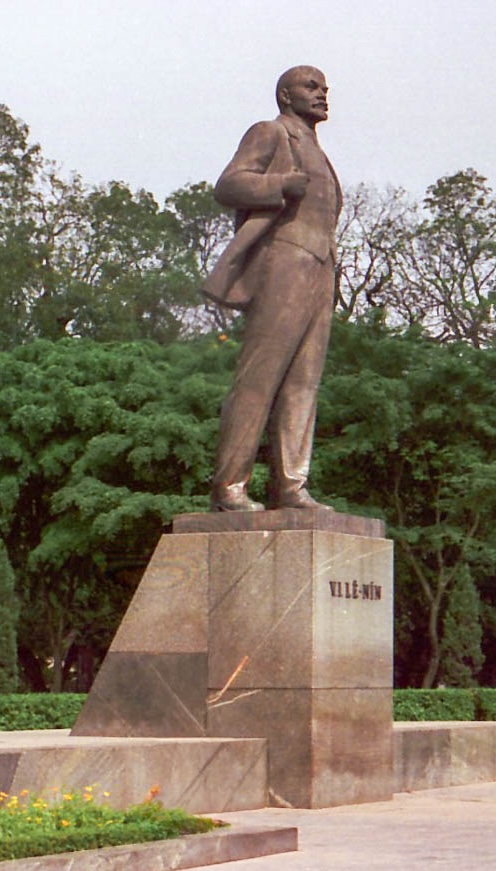
He had an idea of the good life
The territory is riven with hypocrisy. Politicians on our right claim that attempts to give people the choice to opt out of social media feed are paternalistic, while at the same time they urge governments to promote “western values”.
Lefebre, who identifies himself as a liberal, acknowledges that promotion of the ideal good life often fails, the standout example being Soviet communism. Also as has been uncovered in Hungary itself, and as is evident in Iran and the USA, promotion of an illiberal order is often a cover for cronyism and corruption.
He challenges our thinking about liberalism and makes us think about the extent to which we wish to promote ideas of civic virtue and “Australian values”. He even finds one point of semantic agreement with Pauline Hanson, in relation to her assertion that Australia must be a monoculture: Lefebre’s provocative assertion is to see liberalism as Australia’s monoculture. That doesn’t seem to be what Hanson meant and liberalism does not always shape the policies of those who belong to the “Liberal” Party.
His most provocative statement, prompting us to think about our political ideas, is that liberalism arose in opposition to democracy. That is an acknowledgement of the forces that drag democracy to populism and the rule of the uninformed mob, and the need for strong liberal principles to protect against those forces.
Andrew Hastie’s liberalism
Hastie speaks publicly about his religious conviction, and how it shapes his ideas of public policy in a secularized democracy.
“What kind of L(l)iberal are you? asks Andrew West of Andrew Hastie, on the ABC’s Religion and ethics report: Andrew Hastie swaps military kevlar for the armour of his faith.
It’s a difficult question for Hastie, whose Christianity is a deep personal conviction. He’s not one of those politicians who uses the term “Christian” as some form of a political franchise, or one who strives to be seen at church on Sundays. As a soldier who has served in Afghanistan he has had to reconcile his religious conviction with his military duties.
He also grapples with the moral problem of being a prominent member, and a possible leader, of a party whose policies and practices are often quite out of line with the moral teachings of Christianity.
That’s about Hastie as a prominent member of the Liberal Party, who clearly disagrees with those who believe the party should place itself on the populist “right” in competition with One Nation. He is seen by moderates in the party as a conservative for his stance on same-sex marriage for example, but he sees One Nation as disruptive and undisciplined, rather than conservative. In fact he defines himself as a Burkean or Whig conservative – a tag that could apply to many on the “left” struggling to defend institutions of democracy.
West is not brash enough to ask how he would govern if he were prime minister, but he does ask Hastie how he would govern in an Australia that has become increasingly secularized. Hastie’s responses are consistent and considered: he is no “Christian nationalist”. But at the same time he points out that many of our liberal conventions and democratic institutions have been shaped by Christian teachings – an idea brought to prominence in Tom Holland’s work Dominion: The Making of the Western Mind. More generally, Hastie recognizes the idea of “common grace” – a virtue shared by all people regardless of their religion.
Some may see Hastie’s presentation on the ABC as a political pitch to the centre, noting his dismissal of the hard-line neoliberal doctrines of Hayek and Friedman, and his rejection of the idea of “small government” as a policy platform.
It’s quite a different emphasis from the way he presents himself to his electorate, with his negative stance on climate change policies, his affection for the UK, and his dog whistles on immigration and multiculturism. These are covered in the roundup of 25 October last year – Hastie’s little corner of the world. That little corner, his Canning electorate, is probably the most “white” and least multicultural of all urban electorates. One Nation, buoyed by their success in the overlapping Secret River state electorate, has Canning in sight. Hastie probably guesses that the English and South African immigrants in Canning are unlikely to tune in to Andrew West’s Religion and ethics report.