Public ideas
Prophets of end times
Still waiting
Religious fanatics prophesising the end times are mostly harmless, until they turn up in powerful political circles.
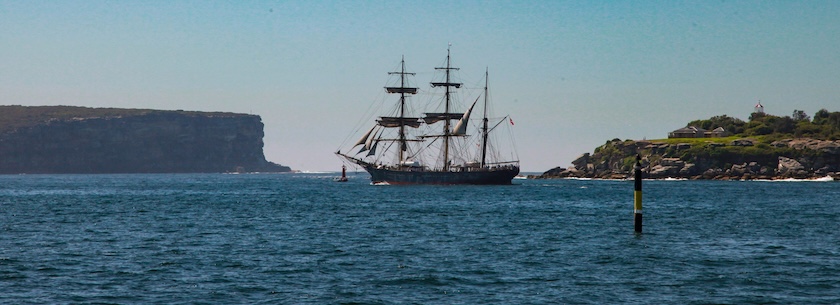
There is a persistent (but poorly documented) story that in 1924, 2 000 members of the Star of the Sea built an amphitheatre at Balmoral Beach, from where they would be the privileged few to witness Christ walking through the Sydney Harbour heads to announce the Second Coming and the End Days.
The gathering is probably an apocryphal story but there was an amphitheatre and even if there was a large gathering, to use Douglas Adams’ classification, it was “mostly harmless”.
But it’s a little more serious when people engaging in End Days talk are decision-makers in the world’s most powerful and heavily-armed country.
Posted on Open Forum, reproduced from The Conversation UK, is Juliana Tappe Ortuz’s article It’s the end of the world as we know it, describing beliefs among Americans in Trump’s inner circles that we are facing some sort of end times. Some draw on interpretations of Abrahamic scripture, particularly those about great battles in the Middle East, while others have more secular versions to do with transformations to be driven by artificial intelligence.
There’s no point in subjecting these beliefs to any form of rational analysis, or even in examining how sincerely they are held. The point she stresses is that the idea we are living in extraordinary times legitimizes abandoning the norms and institutions that have held the world order together. She writes:
Research has shown that people are more willing to support extraordinary measures when they believe they face an existential threat. It has also been shown that political leaders’ psychological dispositions matter more in times of uncertainty. The unforeseeable effects of technological and environmental transformation create risks and anxiety – and the danger is that leaders treat opponents, social movements or minority groups as mythical foes.
Also, she points out, they help distract us from real problems that may not deserve the classification “existential”, but that impose serious threats to our societies and can be solved through collective effort using political processes, such as climate change and severe inequality.
There is now no trace of the Balmoral amphitheatre – it was demolished in 1951 to make way for construction of a block of apartments.