Public policy
Our universities – underfunded and underloved
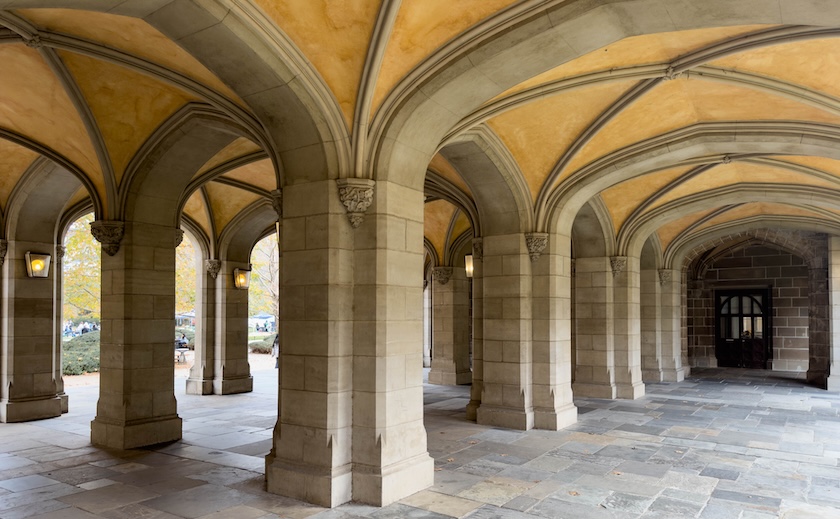
University of Melbourne
Our stock of national assets – our common wealth – has been run down by commodification of higher education.
Some see universities as places where scholars devote their lives researching the metaphysics of extinct languages and the social hierarchy of bisexual marmots, while others see them as training grounds with a mission to produce job-ready graduates.
That false dichotomy, based on a reductionist way of thinking, has shaped public policy toward universities. Guided by utilitarianism and neoliberalism’s disdain for the public sector the latter model has tended to dominate.
It is tempting to sheet the blame for what historian Hannah Forsyth calls “the enshittification of education” on particular politicians or on right-wing governments. Indeed as we saw during the Covid pandemic the Morrison government conducted its war on learning with full vigour, deliberately excluding universities from the “JobKeeper” program that allowed casinos, AFL and NRL clubs, and advertising agencies to hold on to their staff.
Within his cabinet Morrison was able to tap into the anti-science/anti-Enlightenment movement in the Coalition, a movement that has been ascendant in the Liberal Party since Howard’s election in 1996, and that has always been one of the National Party’s solid planks. But he would also have been confident that there would be little public reaction to his tough treatment of universities: on that he was right.
Weakening public support for universities is confirmed in a research project by a team of researchers at ANU, who published in a paper Public perceptions of Higher Education and its role in strengthening (and weakening) democracy in Australia. The paper’s abstract summarises their findings in three strong points about the risks to democracy when universities lose public support:
First, Australians’ confidence in universities remains relatively high compared to many other public institutions, but it has declined steadily since 2019–2020. The decline is most pronounced among Australians without a university degree, widening an evaluative gap between graduates and non-graduates. This emerging cleavage matters because universities’ capacity to contribute to democratic resilience depends on a broad social licence that extends beyond those who directly benefit from higher education.
Second, perceptions of fairness and access are shifting. Only a minority of Australians view a university degree as necessary for success, while substantial proportions believe access has become more difficult over the past decade, especially for students from low-income families and those in regional and remote areas. These perceptions are consequential not only for equity and workforce development, but also because perceived unfairness in educational opportunity can erode trust and democratic satisfaction.
Third, Australians strongly endorse universities’ workforce and economic roles (training young people for future jobs, developing new ideas), but are more ambivalent about their civic mission. Only around three in ten Australians say universities should “definitely” foster informed citizens, encourage civic participation, or provide space for controversial ideas to be debated. Yet the paper finds that evaluations of universities are closely connected to democratic resilience: Australians who believe universities are doing a good job are substantially more satisfied with democracy, while perceptions that access is worsening are associated with lower democratic satisfaction.
Even economic hardheads with little regard for democracy would acknowledge that conditions that weaken universities’ contribution to democracy also weaken their contribution to a society’s resilience. That is society’s capacity to understand and adapt to technological change, its willingness to bear the cost of structural adjustment in response to changes in the geopolitical order, and its understanding of the threats (and opportunities) presented by climate change.
The researchers focus on the period 2019 to 2025, over which time the proportion of Australians reporting that their confidence in universities was “none at all” or “not very much” rose from 21.0 percent to 37.9 percent.
Their research goes into possible reasons for this loss of confidence. One is the way a university education has become more financially out of reach for young people from poorer families and from non-metropolitan regions. Although they do not mention it as a causal factor, this growing inequity probably goes back to the Hawke government’s 1988 “reforms” which re-introduced student fees and allowed universities to recruit international students paying full fees. At the time these changes were modest in impact, but they set the foundation for what was to become a highly inequitable tertiary education system.
The other reason the researchers identify is the perception among young people that a university degree is becoming less necessary for success in today’s work. That is, if they see “success” mainly in monetary terms.
That finding begs questions about what people – people with degrees and people without degrees – value in a university education. In broad terms this is probably about the commodification of a university education. It becomes a transaction or a “deal” between a customer and a supplier, rather than a gift from the community, with an implicit obligation to repay society in professional service without abusing the privilege of professional accreditation as a means to exploit the less well-off.
This thinking means that if universities are to become more businesslike, then they obviously need smartening-up, away from that old organic model with vague responsibilities and multiple objectives, to something resembling the modern corporation, with established objectives, a performance management structure, key performance indicators, and clear, strong hierarchies of authority. By this transactional model this is clearly a job for the management consultants.
You can hear a short (6-minute) Schwartz Media 7am podcast on the powerful firms reshaping our universities, where Rick Morton describes how consultants have come to re-shape Australian universities. It was recorded in 10 months ago, at which stage the most prominent issue was KPMG’s influence on the University of Technology Sydney, which saw each unit in the university turned into a “profit centre”. Since then there have been a set of scandals at ANU, described in Julie Hare’s Saturday Paper article Former ANU VC accused of “serious misconduct”. That article goes into recent allegations of nepotism, but the backstory is in a 2025 Saturday Paper article by Morton The consultancy driving ANU cuts, describing the secrecy with which the vice chancellor engaged a firm of consultants to recommend budget cuts.
One consequence for universities that embrace consultants’ advice is a large expansion of managerial overheads, funded by cuts in academic staff. That’s why there are academic staff cuts at universities, such as ANU, which do not face an immediate funding problem.
We get a broader picture of how consultant-driven managerialism has shaped our universities in an ABC Long Readcompiled by Damien Cave Is Australia’s university empire losing global appeal?.
He quotes John Keane of the University of Sydney, expressing what most of his academic colleagues feel:
“Neo-liberal” pressures on scholars are everywhere intensifying. … Overstaffed and overpaid university managers are fixated on KPIs, global rankings, reputation building among donors, cutting costs, shedding full-time staff, casualising teaching, downgrading research, advancing their own careers, and awarding themselves handsome bonuses.
This model applies not only domestically, but also to what has become a successful “export industry”, as universities take their place alongside coal and iron ore as earners of foreign exchange, and as foreign students and their families compensate for the withdrawal of government funding.
There is nothing extraordinary about opening our universities to foreign students. The world’s best universities take in foreign students, but in much smaller numbers than our universities, and those students are given a far better experience, an experience that boosts those host countries’ diplomatic soft power. The Australian offering, however, is described as:
Second-rate and too expensive, a lifestyle gem of overpriced mediocrity. That’s how the young strivers of Asia increasingly describe Australia’s universities, and Australia.
It’s evident from Cave’s article that government ministers are aware of the problem. They have made moves to cap foreign student numbers, and have shut down shonky operators purporting to offer training courses. But as we approach the Albanese government’s fifth budget, while there has been some relief on student debt, it appears that our universities will be left underfunded and will still struggle to find the public support that would provide the political pressure to restore them to a more secure footing.
Naughty words, naughty cartels
The courts hand down two judgements reminding governments that their powers are constrained by Constitutional provisions guaranteeing freedom of political expression.
Naughty words
Paleogeographers and primary school children have always been puzzled by the River Murray’s course. After running north west for 900 kilometres it makes an abrupt left turn at Morgan, finishing at Lake Alexandrina, rather than at the head of Golphe Joséphine (St Vincent’s Gulf), which would all fit with the way rivers usually run. But from the river to the sea lie the Mount Lofty Range, which gets in the way. Did the range rise, forcing the Murray to change course, or did it never flow into the gulf?
It’s possible that the paragraph above contains a phrase that constitutes a criminal offence in Queensland. New South Wales Premier Chris Minns, following Queensland’s example, doesn’t want to go so far as to ban “from the river to the sea”, but he does want to go along with the idea of banning “globalise the intifada”. It’s not clear if that ban extends to the alternative spelling of “globalize” of the capitalization of “Intifada”.
Minns remains determined to press ahead, even after the New South Wales Court of Appeal struck down his government’s laws, passed after the Bondi murders, that empowered police to restrict political protest. ABC political reporter Alexander Lewis quotes from the court’s judgement, which rejects the government’s notion “that the community can and should be protected from political expression by some members of the community because it might be upsetting, inflammatory and divisive for other members of the community”. The justices go on to state that our system of government “entails acceptance of the potential for disharmony, incivility and disruption that is part and parcel of democratic intercourse”: Chris Minns considers his options after court ruling over NSW protest laws.
In a submission to the New South Wales Parliamentary Committee on Law and Safety – Measures to prohibit slogans that incite hatred – constitutional expert Anne Twomey has written:
… a purpose of protecting the community from offence, hurt feelings, insult, and the damage to social cohesion that may be caused by disagreement and debate, is not a legitimate purpose, as it would prevent robust political communication. However, a law directed at preventing the incitement of violence, intimidation, and harmful dissension and strife in the community is for a legitimate purpose.
It is almost certain that the Queensland law will be subject to appeal. There was a protest in Brisbane at which more than 20 people were arrested for chanting “from the river to the sea”, but the police had no authority to arrest those who uttered minor grammatical variants of that phrase. It was all rather ridiculous, and it made the law look like an ass. The fact that the protest was peaceful detracts from any argument that using such phrases constitutes an incitement to violence. Whether it refers to the ancient flow of the River Murray or to Palestine it’s simply a geographical description, with political implications in the latter example. In any event incitement to violence by any means is an offence in most jurisdictions.
And if there are other phrases that upset some members of the pro-Netanyahu lobby, is the Queensland government going to list them all, with their spelling and grammatical variants?
Naughty incumbents
In 2018 the Victorian Parliament passed legislation that capped the amount that anyone could donate to a political party or its candidates over the four-year period between elections. At just under $5000 it was a tough cap, effectively precluding the very rich from making substantial donations.
But there was a carve-out for “nominated entities” – income-earning bodies attached to established political parties.
Constitutional expert Anne Twomey explains how the legislation was drafted in such a way to favour the Labor, Liberal and National parties in her Conversation contribution describing how the High Court struck down the Victorian law, because it was contrary to the constitutionally-implied protection of political communication. Former Queensland Integrity Commissioner David Solomon has a Pearls and Irritations contribution – Electoral laws versus free speech – describing other aspects of the judgement.
Because the High Court struck down the legislation in its entirety, Victoria now has no laws governing campaign contributions: it will be in a hurry to do something before the state election in November and before the mining oligarchs build up the coffers of the Liberal, National and One Nation parties in their campaign to stymie the renewable energy transition.
The judgement has implications for the Commonwealth as well, because the Albanese government’s electoral legislation, due to come into effect next year, has carve-outs similar to those in the Victorian legislation. Former Senator Rex Patrick and former MP Zoe Daniel have a case before the High Court challenging the Commonwealth law.
As an aside, we might recall that Zoe Daniel was the only “teal” member to lose in last year’s election. In a Trumpian-stye campaign Liberal candidate Tim Wilson raised the issue of antisemitism, following the firebombing of a synagogue in the electorate, even though it had nothing to do with Daniel’s policies. An organization called “Repel the Teal” and the far-right lobby Advance came out strongly in support of Wilson.
Even with all this backing Wilson won the seat by only 175 votes. In view of his extreme neoliberal stance, and his role as “shadow treasurer”, re-instating an independent MP – or a Green or Labor MP – is an important challenge for those who seek our country to be guided by sound economic policy. Even Liberal Party supporters should take note of the economically destructive path on which Thatcher and Reagan took their parties and their countries.
Commenting on the High Court’s judgement, the Centre for Public Integrity has issued a short statement, concluding with a message for all governments that try to privilege incumbent parties:
The Centre for Public Integrity reiterates its call for reforms that eliminate structural advantages for major parties and ensure electoral laws reflect core democratic principles of fairness, transparency and equal participation.
The government’s insipid gambling “reforms”
We have waited three years for the Albanese government to respond to a report recommending a ban on gambling advertising. That response is gutless.
Three years after the Albanese government was presented with the Murphy Report recommending a ban on gambling advertising, it has made its insipidly underwhelming response.
What it calls strong action to tackle gambling harms in a prime ministerial press release is a set of minor restrictions, the main one being a limit on TV advertising to three ads an hour between 0630 and 2030 and during match broadcasts, but with open slather outside those times. There are some other minor restrictions, and some weird restrictions such as ”banning gambling ads on the radio during school drop off and pick up times”, presumably based on the assumption that most Australian parents drive Holden Commodores fitted with an AM radio as the car’s entertainment system.
Samantha Thomas and Hannah Pitt of Deakin University have a Conversation contribution summarising the Murphy recommendations, the government’s response, and their considered view on the effectiveness of the government’s response: They won’t do much to reduce harm.
The Saturday Paper’s Karen Barlow has an article – Albanese on gambling: “You’ve got to treat people like adults” – focussed on the politics around the government’s response, including the divergent views within the Labor Parliamentary caucus. To become law the government’s plans will have to make it through the Senate, where different groups and political parties all seem to be in favour of some form of gambling reform, but with varying levels of conviction. She reminds us that the gambling lobby has treated both the Labor and Coalition parties generously with campaign funding.
Senator David Pocock, some other independents, and a few backbenchers from the main parties provide some of the strongest voices calling for tougher controls than the government is proposing. Pocock would like to see a complete ban on gambling advertising, as recommended by the Murphy committee, and a small levy on every bet to compensate the football codes for their loss of advertising revenue: David Pocock calls for complete ban on gambling advertising, slamming “vested interests” and Labor's half measures.
You can hear Tim Costello’s views on the government’s plan in a 9-minute clip from a talkback program on the ABC’s Melbourne station. “Timid” is the word Costello uses to describe the government’s response to the Murphy recommendations. He is in no doubt that the government is overly responsive to lobbying by overseas-owned gambling companies and by the AFL and NRL.
He is particularly critical of the way the government intends to put the onus of protection from gambling advertisements onto parents and children, rather than onto the gambling companies. Vested interests, he says, are “aligned against the public”, contemptuous of surveys that find 80 percent of the public, including 76 percent of AFL fans, want all gambling ads gone.
We don’t know why the government has been so hesitant in responding to the Murphy recommendations. Maybe Albanese and his colleagues are extremely risk-averse. If so it’s not a common characteristic of left-of-centre parties. Maybe they have reason to fear the football lobbies, who have drawn on the popularity of football to exercise a ruthless contempt for the public interest, such as pushing cash-strapped governments to allocate $1.1 billion of public funding to build a stadium that Hobart doesn’t need.
If we take the government’s statement at face value, rather than as a rationalization of a bad decision, it’s about achieving some “balance” (to use Albanese’s word) between libertarianism and paternalism. If so, has Albanese’s judgement been well-informed about the national mood? If we look back on times of film and literature censorship and regulations on sexual behaviour, Australia has certainly become somewhat more libertarian over the years, but it seems that the government’s permissive approach to gambling is disproportionately libertarian. As advocates for reform point out, almost all “developed” countries have much stronger controls than we have, and in many areas of our lives, such as driving cars and using pharmaceuticals, we seem to be quite accepting of regulations that protect us from our own folly.