Public ideas
Where is America’s left?
America’s left is hard to find, but it’s there, and it influences our public ideas.
Over the last few years, as we have observed the wreckage the Trump administration is inflicting on the United States, we have tried to reassure ourselves that we are different, and are somewhat insulated from those political forces. That was the main theme in last year’s Boyer Lectures, for example.
We do indeed have some institutional protections: compulsory voting, preferential voting and an independent electoral commission are the three most cited. But, as the South Australian election demonstrates, we are not exempt from the influence of American political movements.
We can trace parallel political developments from both a left and right perspective. The right in Australia went along with the Truman cold-war doctrine. The anti-White Australia movement drew energy from the US civil anti-racial segregation movement. Reagan’s neoliberal obsession with “small government” infected both our main parties. US and Australian rallies in opposition to involvement in Vietnam were virtually indistinguishable, right down to the choice of rock music. And so on.
But behind these similarities we are also aware that American political systems don’t always easily translate to Australia: it’s a little more difficult than a left-hand-drive to right-hand-drive conversion. America’s “left” looks different. While the Republican Party has similarities with our Coalition, the Democratic Party looks very different from our Labor Party.
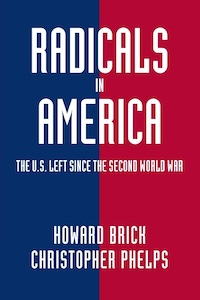
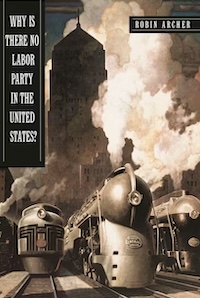
In two successive Rear Vision programs – America’s radical left part 1 and America’s radical left part 2 – Annabelle Quince interviews Christopher Phelps, co-author of Radicals in America, Robin Archer, author of Why there Is no Labor Party in the United States and Michael Kayzen, Professor of History at Georgetown University.
Part 1 takes us up to the start of the New Deal, and Part 2 takes us up to the present day, with particular reference to surprise developments, such as Zohran Mamdani’s landslide win in the New York City mayoral election, and the emergence of “Medicare for all” as a rallying call for the left. Because the “left” is not some isolated political movement – as these scholars remind us America’s left is deeply rooted in that country’s traditions – the programs provide something close to a 250-year political history of the US.