Politics
The Coalition’s conflicts
Two distinctly different forces are using the remnants of the Liberal Party as a base to build a far-right coalition.
For an outline of the ideological conflicts in what’s left of the Parliamentary Liberal Party it would be hard to go past Monday’s Four Corners program – Realignment: A battle for the Liberal Party's identity and direction . It describes not only the factions in the Liberal Party, but also the two forces dragging the party away from the centre.
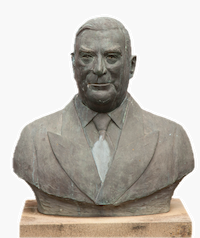
A broad church?
One of those forces, temporarily dominant, would take Australia down the low-tax-small-government path, emasculating the capacity of governments to provide necessary public goods, and eroding the civilizing influence of shared public services. There would be an economic cost in terms of services not provided, human potential not realized because of cuts in education, and public infrastructure not built. As the regulatory institutions of the state are demolished – the institutions that keep markets operating – a crony capitalist economy would emerge.
The other force, nourished by the politics of grievance and supported ideologically by foreign fascist movements and by local mining oligarchs, would take Australia down the MAGA path. It’s hard to see how it would play out: we can see how it’s going in the USA. When Germany, Italy and other countries went all the way down that path in the 1930s it didn’t turn out well.
Spin is a poor substitute for authenticity
Voters, turned off by political spin, turn to independents who offer authenticity.
In May 1940 when Britain was under imminent threat of invasion by Germany, Winston Churchill secured the support of the Labour Party to become prime minister and form a wartime coalition.
It would have been normal political practice if he had introduced himself to the British people in a way to relieve anxiety, with assurances of the country’s capacity to defend itself, making the best of the country’s rare battle successes in the first few months of the war. In all probability public servants had already written such a speech.
Instead, in his first speech to the House of Commons, asking for a vote of confidence, he told the British people “I have nothing to offer but blood, toil, tears and sweat.”
That speech and others soon became famous, not just for their eloquence, but also mainly for their frankness, particularly for their absence of weasel words and spin.
When FD Roosevelt, finding it hard to mobilize his country’s support for Britain, asked one of his advisers who Churchill’s speechwriter was, the response came “Mr President, he rolls his own”.
It was one of those rare occasions when a prime minister could exercise leadership, clearly warning people of the hard task ahead of them. The press was under heavy wartime censorship. Newsreels – the new media of the time – carried the image of the Wehrmacht rapidly advancing towards England. And the opposition had been brought into the tent. He had a clear run to explain the extent of the challenge facing the UK.
But he could still have asked loyal officials to write speeches for him: after all, he was rather busy.
Anyone who has been in the Canberra (or Washington, or Berlin, or Brussels) bubble knows the speech-writing process. Just as sergeant-majors allocate sentry duty in the fairest way, so that sch horrible tasks can be shared, so is speechwriting assigned to public servants in an almost random fashion. Even if the first drafter has a flair for writing and some personal enthusiasm for the government’s agenda, by the time the speech has been modified by other public servants, and the minister’s or prime minister’s minders burnish it with political spin, it comes across with the eloquence of a microwave oven instruction manual translated from Korean.
At least the public servants who draft those speeches are paid. The people who have to listen to them, annoyed that their time is being wasted, get angry about being patronized with meaningless spin and repeated three-word mantras.
The same, in a more compressed way, applies to “talking points”, the daily spin distributed to party members.
Driving this process is the supposed need for political control. Politicians, particularly ministers or “shadow ministers”, must not be allowed to go off-piste, where they may be ambushed by a journalist hungry for an opportunity to score a gotcha point.
Soon after Angus Taylor’s ascension to power Liberal Party apparatchiks had talking points prepared for the newly anointed “opposition leader”. Someone must have left them on a podium, or in a café in Manuka, because the ABC’s Clare Armstrong got hold of them. There’s no point in quoting them, because you’ve probably heard them verbatim, and they void of anything that could classify as “public policy”. Deputy “opposition leader” Jane Hume, like an altar boy who learns Latin responses without the first idea of what they mean, responds to every question with a line from her talking points, even if it has nothing to do with the question.
Sometimes politicians try a bit harder than Jane Hume to respond to questions, when they try to reconcile their own considered political opinions with the assigned drivel on talking points. On last week’s Saturday Extra Nick Bryant interviewed Fiona Scott, federal Liberal Vice President and former member for Lindsay, who gave a realistic and measured assessment of her party’s problems. Her assessment had a partisan bias, but was free of spite and silly statements, until the final ten seconds, when her closing words were that Taylor would “provide a very good opposition to what is a terrible Labor government”. It was if she realized that the party minders would be down on her if she didn’t include that adage we keep hearing about “a terrible Labor government”. In those ten seconds she changed her role from someone helping lead the party out of the wilderness, to that of just another party hack.
But the master of patronising spin is Taylor himself. “If you tax something, you get less of it"; “The worst government in the nation’s history”; “Low on standards, high in number”. He’s one of the best educated members of Parliament, but in a public forum decides to present himself as illogical and unintelligent. That’s a deliberate choice to treat the Australian people with patronising contempt. Perhaps it hasn’t occurred to Taylor that those who enjoy the benefits of learning in the world’s finest institutions may have a moral obligation to enlighten others, rather than to use their voices to confuse people for pollical advantage, to devalue the public purpose, and to show contempt for the common wealth.
Instead of enlightening the community politicians practice what they learn from spin doctors, who teach the dark arts of sophistry and obfuscation. On Late Night Live David Marr interviews Toby Ralph, a master of those arts, about those techniques: Deflect, distract, deny: how politicians avoid direct answers. Don’t answer the interviewer’s question, instead answer the question you would like asked, the one on your speaking notes. If you don’t want to explain something, just say it’s complex. And never apologise for anything.
The session includes a discussion of the ways politicians navigate a “post-truth era”, an era in which public relations hacks outnumber professional journalists. Ralph explains the many Russian words for “truth”. one of which is a statement that fits with the listeners’ imagined world order. No wonder right-wing politicians in the English-speaking world envy Putin. When Marr asks Ralph to name the journalists politicians fear the most because of their persistence, he nominates the ABC’s two Fergusons – Sarah and Adele.
Writing in the Saturday Paper Chris Wallace of the University of Canberra asks Has government by spin had its day?. Her article is mainly about the spin that has been used to refer to politics worldwide, particularly the euphemisms politicians use to refer to Trump’s destructive madness. Locally she focuses on the problems our government had in keeping its various politicians on message after the Bondi murders – as if consistency in choice of words was the most important way to respond to the situation.
She asks if instead they had thought about the old-fashioned alternative of MPs getting together in caucus to come to a general agreement, consistent with the values of the Labor Party, and expressing their ideas in their own way. They might contradict one another at the edges, but that’s surely a small political cost compared with the cost pf appearing to be second-rate actors presenting their lines in an amateur theatrical performance.
Chris Wallace contrasts the government’s gauche response to the Bondi murders with Allegra Spender’s response, a response that went straight to the point of racial hatred, without having to cover her message in an opaque wrapping to fit with prepared talking points.
Spin doctors don’t understand one of the basic rules of voter behaviour. People are looking for authenticity. That’s understandable: they want to know the values of the people they are voting for.
A party can make a set of promises. A researcher may poll voters on each issue in the campaign, and report on which party is closest to the electorate. On-line tools such as the ABC’s Vote Compass do just that. It’s similar to a disciplined method one may use in buying a house or a car. But voting for a government is different, because it’s not about a one-off completed transaction: it’s about the ongoing trust we put in people we employ to serve us for three or four years, during which time many things will change, and some of those decisions will have consequences for a long time. (Think of the enduring damage of Howard’s capital gains tax changes.) We want to know the underlying values of those we elect, and the consistency with which they will apply those values in decisions that come up during their time in office.
That’s why insipid platforms like UK Labour’s “third way” – a little socialism here, a little free enterprise there – failed.
Closer to home, it’s about the attraction of One Nation. Commenting on the findings of the ABC’s analysis of One Nation’s support, Kos Samaris says:
[Voters] are starving for authenticity.
The reason why internationally right-wing populism is succeeding is because at the epicentre of that is that level of authenticity. And yes, that authenticity for that particular version of politics is attached to outrage and scandal and all that sort of stuff.
In that analysis the researchers at the ABC Story Lab were trying to find what stood out among One Nation’s supporters. The difference that stands out most strongly is about trust of politicians: One Nation supporters have very little trust in politicians. This suggests that One Nation support, particularly in opinion polls, is a protest against all parties.
Of course it’s easy for populist parties to focus on a few hot issues, and offer simple solutions for complicated problems. It’s just as easy for politicians in the main parties to dismiss One Nation’s appeal on that basis.
It’s clearly harder for established parties aspiring for government with a wide platform, with many politicians in diverse electorates, and with internal party factions, to establish the authenticity that comes easily to small populist movements. That’s why they rely on mechanisms like speaking notes, with cliches like “Australian values” that are so vague that they convey nothing about what those values are, and try to steal the ground from populist groups by advocating their own idiotic policies, such as tariff protection and nuclear power.
Maybe it’s impossible for the traditional parties to achieve the authenticity they once enjoyed, when class differences based on economic circumstances allowed for a clear left-right division.
That’s where independent candidates have it all over the established parties, because as Spender and others illustrate, they can be authentic within their electorates. If, as will surely happen, the size of the House of Representatives is enlarged and electorates become smaller, there will emerge more opportunities for independents.
Strategists in the Liberal and National parties who prioritize re-building the Coalition, and media commentators who cannot imagine a world without two competing “parties of government”, don’t grasp the reality of what is happening before their eyes, even though we have the experience of the Gillard government, and several state and territory examples of minority government.
Over the last 9 months it has become obvious to outside observers that there is no way the Liberal and National parties can be brought together in a way that conveys any sense of authenticity: the ideological differences are just too great. But if it stood independently, quite separate from the National Party, and kept an ideological distance from One Nation, the Liberal Party should be able to coalesce around a set of shared values and find a place for itself, not in a winner-take-all contest, but as part of a Parliament that brings together enough representatives around the political centre to allow a stable executive government to form.
That’s the way democracy works in many European countries, in a way it doesn’t work in countries that cannot shake off the anachronisms of Westminster, two-party-systems, tight coalitions, shadow cabinets, and terms such as “bipartisan” and “party of government”.
Farrer – a three- or four-way contest
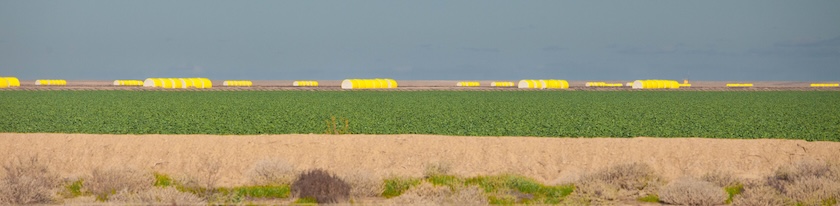
Farrer — cotton country
Sussan Ley’s parting gift to Taylor and the boys is a by-election for Farrer. The pollsters can’t offer us much guidance.
A disastrous Newspoll for the Coalition provided Taylor and his mates with the excuse to move against Ley. These were some of the same people who used a run of bad Newspoll results to bring down Turnbull.
Of course politicians follow polls closely – don’t believe them when they come out with the cliché “the only poll that counts is the election”.
But do they understand them – their inherent biases, their sampling errors, the way respondents react to choices presented by pollsters?
The main story is that some polls have One Nation overtaking the Coalition in primary support, perhaps even in TPP support in some electorates. People will be looking closely at the outcome in the coming Farrer by-election – Ley’s old seat – as an indication of vindication or otherwise for Taylor’s coup.
It’s a fair bet that the Farrer by-election won’t see the sort of national swing to One Nation that’s showing in the polls (19 percent in William Bowe’s Bludgertrack), for five reasons:
- Pollsters offer respondents only a limited number of choices: some people, not offered their favourite right-wing party (e.g. Trumpet of Patriots) as a choice, go for One Nation as a proxy.
- Similarly pollsters don’t even try to assess support for independents. There is no point in polling for independents, because the term “independent” has no name recognition in the way choices such as “Spender” or “Wilkie” enjoy. A “One Nation” in a poll may simply mean “not one of the old parties”.
- Some biases, including the non-response bias, are unavoidable. Outside election time people are politically disengaged. Polls may simply be picking up the more politically concerned. If they are the most disgruntled that would overstate support for One Nation.
- A poll is a cost-free way to send a message to the government or to political parties – cost-free because it has no consequences. (I had an aunt, politically as attached to the political right as one could imagine, but when pollsters approached her she always chose “communist” to display her disgust with the established parties).
- The One Nation poll numbers are highly volatile. Bowe’s Poll Bludger reports on Victorian polls showing a shift on One Nation support, over a short period, from 21 percent to 11 percent.
It would be a brave person who would predict the outcome in Farrer, but we can look at its geography and its political trends as indications to where it may go.
It is a strange electorate, stretching from Albury in the east to the South Australian border in the west. If you drive from Canberra or Sydney to Adelaide you will be passing through the middle of the electorate from Narrandera until you leave New South Wales to cross the Murray at Mildura. As you head west the settlements become fewer, smaller, and more run down. The farms, however, become larger and are more akin to agribusinesses, with water-hungry crops like cotton and almonds becoming dominant.
Full of useful data, with informative interpretation, is Antony Green’s post on his Election Blog: The Coalition to face a messy by-election in Sussan Ley’s seat of Farrer.
It will be messy, in part because it is probable that both the Liberals and the Nationals will put up candidates: they seem to agree that while they won’t contest an already sitting Coalition member, they will put up their own candidates when a seat is vacated.
Under different boundaries it was held by Tim Fischer until 2001, when Ley won the seat by 206 votes in a Labor-National-Liberal contest, and held the seat comfortably from then on. The story is a little more complex however, because both the Coalition (National or Liberal) and Labor vote have been falling, and independents have done well in Farrer in the 2019 and 2025 elections.
The 2025 primary votes for Farrer are shown below, but they offer little guide to what may happen in the by-election.
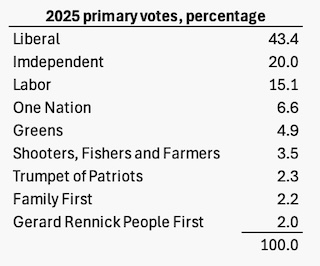
Undoubtedly One Nation, buoyed by national opinion polls, will run again. At first sight it should do better than the 6.6 percent that it won last year, but those polls don’t pick up other parties on the far right, who won 10.0 percent of the vote. So the far right will be coming off a base of 16.6 percent. And there will almost certainly be a National Party candidate in competition with One Nation, with a similar populist message. Both these effects could see Hanson and Joyce brought back to earth.
The candidate to watch is independent Michelle Milthorpe, who won 20 percent of the vote last year and is running again. As a commentator on Green’s blog reminds us, she will be the only significant candidate who already has name recognition. Green also points out that she did well on preference flows last year, not just from Labor and the Greens, but also from the parties on the right – for example 62 percent from Trumpet of Patriots and 44 percent from Family First. Unsurprisingly her best outcomes were in Albury, while Ley’s vote was strongest in the small settlements in the west. In these figures, and in one of those walk-around interviews conducted by the local ABC, there is a strong hint of an “anyone but a traditional party” mood. Casey Briggs believes “it could be a very interesting and complicated election”: Ley leaves Taylor an immediate electoral test with Farrer by-election.
Milthorpe is interviewed on Radio National Breakfast – Independent hopes for Farrer by-election upset – where she discusses issues of importance in the electorate. These include the usual rural concerns of service provision. She also stresses the importance of immigration, in terms of providing workforces for rural industries, and staffing health services. That’s quite different from the populist line.
She reminds us that just over the Murray from Farrer is the electorate of Indi, held by independent Helen Haines with a very comfortable margin, and that in the region are state electorates held by independent members. Not far to the north is the Calare federal electorate, held by Andrew Gee who invites former Nationals colleagues to join him on the crossbench.
You can find more about Milthorpe on her website, including an opportunity to donate to her campaign.
In view of the way men in the Liberal and National parties behaved towards Ley, and the fact that a respected woman is already on the ticket, the party elders will surely be thinking of the gender of their candidates. If they think gender is just some urban “woke” thing, they have never really come to know how spirited the CWA can become when in full flight.
My own bet is that it will be an Independent-Liberal-National contest. John Hawkins of the University of Canberra has a different view in his Conversation contribution, which explores various possible outcomes. He sees it as a four-way tussle, believing One Nation has a realistic chance. He concludes:
If the Liberals do hold the seat, they will be saying “well done Angus”. If they lose it to a moderate independent, there may be some buyer’s remorse about replacing Ley with Taylor. If they lose it to One Nation, some will be eyeing Andrew Hastie as their next leader.
South Australia
While on the matter of election speculation, William Bowe’s Poll Bludger reports on two polls (Newspoll and The Advertiser) that suggest the Liberals could be almost entirely obliterated at the coming South Australian election. On a TPP basis Labor is well ahead regardless of the final contest – Labor:Liberal or Labor:One Nation.
Our right to protest – provided it’s OK with the government
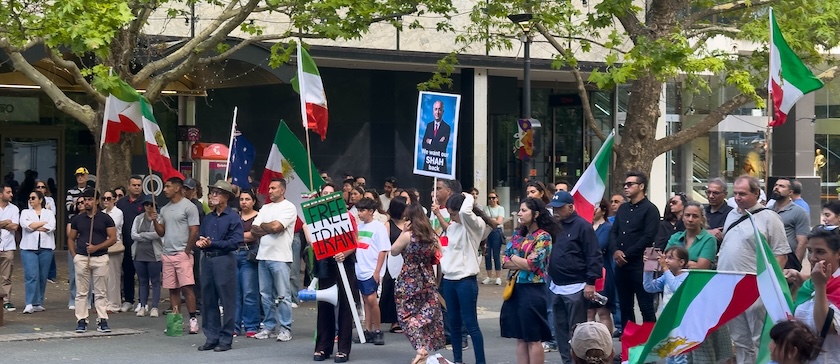
Protesting Persians
Australians have only limited rights to protest, and those rights are being eroded.
Scenes of police heavy-handed behaviour at a protest against Isreal President Herzog brought to mind comparisons with similar behaviour by ICE thugs in Minnesota, and the Bjelke-Petersen government’s violent suppression of protests in 1977.
The ABC’s Rhiannon Stevens takes us through a history of our right to protest in a post How tight is the right to protest?She reminds us that our right to protest is conditional, and is not strongly protected:
What many may not realise is that the right to protest in Australia is not protected by one simple law. It’s implied in the constitution under freedom of political communication and exists under international human rights law, which Australia has agreed to uphold.
Those rights can be curtailed by specific state legislation, as was the case in New South Wales in relation to the Herzog protest.
She reminds us of research by the Human Rights Law Centre revealing that our right to protest has been eroded over the last twenty years.
What may come as most surprise to readers who may associate curbs on civil liberties with governments on the authoritarian right, is that many of the recent restrictions have been by state Labor governments.
Racism in Australia
“Race” is a meaningless social construct, but as a public idea it won’t go away. There is widespread racism in Australia, but it does not seem to be targeted at any one group.
For hundreds of years biologists, anthropologists and philosophers have challenged the pseudoscientific belief that humans are divided into distinct “races”. By the middle of last century, with the backing of DNA evidence, the idea was settled: “race” is merely a social construction.
But the idea is repeatedly resurrected. In Australia during the Voice campaign, Peter Dutton deliberately conflated the concept of aboriginality with “race”. (The term ab-original is pretty clear in its meaning.) In the USA the left coined the term “people of color”, a confusing term to denote the idea of non-whiteness, even though chromatically white is the ultimate in colour saturation. Reference to “race” as the main source of inequality is America’s convenient way of avoiding any Marxist consideration of class-based inequality.
With the idea of “race” kept alive by an unholy right-left alliance, it is hardly surprising that racism keeps emerging as a blight on our society. Because the word has no meaning, any group can be called a “race” – people with dark skin, people with particular facial features, followers of certain religions, particularly if those religions such as Islam and Sikhism have geographic concentrations. (Although Muslim communities in particular stretch halfway around the globe.)
Two recent terrorist attacks, one successful, the other a failure, were directed against the Aboriginal and Jewish “races”. As Ramadan starts, threatening letters have been sent to mosques in Lakemba. Pauline Hanson has made grossly offensive comments about Muslims in Australia.
Governments, keen to preserve social solidarity, like to convey the impression that racism is rare. That’s a wise counter to the media’s general tendency to overstate the extent of social problems. But racism is more common than we like to admit.
Most incidents of racist behaviour probably go unreported because they are fleeting, unwitnessed and unrecorded. For example the ABC’s Gillian Aeria reports on vile abuse directed at Sikh truck drivers, carried by unidentified voices of other drivers over CB radio.
That’s in an industry which may be among the last to abide by norms of respectful workplace behaviour. But surely we could expect something better from universities.
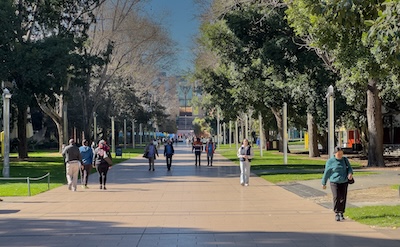
UNSW concourse
Not so.
The Human Rights Commission report Respect at Uni: Study into antisemitism, Islamophobia, racism and the experience of First Nations people paints a disturbing picture of racism at our universities. Local students, international students, academic staff, and administrative staff, all report on racist incidents. It occurs in staff meetings and tutorials, perhaps more so than in informal student life.
The report is not well summarized, but Fethi Mansouri of Deakin University consolidates its main findings in a Conversation contribution “Not met their duty of care”.
The chart below, constructed from data in the report, shows how almost every imaginable minority group associated with universities experiences racism. It combines what the researchers call “direct interpersonal racism” and “indirect racism such as hearing or seeing racist behaviour not aimed at them personally, but directed towards the racial, ethnic, cultural or religious group with which they identify”.
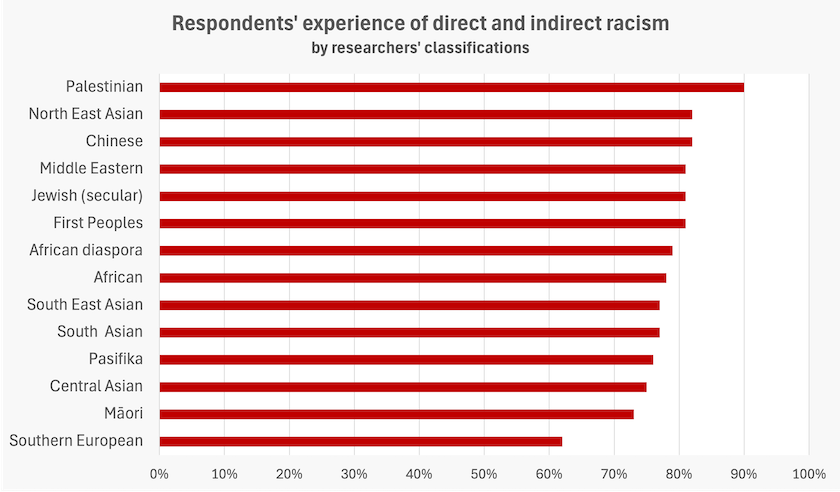
The researchers also looked at racist experiences reported by religious groups. Jews reported the highest incidences (94 percent) but others reported high rates – Muslims (76 percent), and Christians (71 percent).
Largely missing from the survey is information about the perpetrators of racist behaviour. There is occasional reference to “leaders”, but little more. It is largely victim-focussed. Maybe the authors assume that racism is structural: that’s a questionable theory. It would help policymakers if they were to know more about perpetrators – their age (older perhaps?), their ethnicity, and if racism is more prominent in certain faculties (faculties with traditions of bullying perhaps?).
What stands out in this ugly picture is that no one group of victims stands out. Over the last three years, ever since the Hamas-led terrorist attack in Israel, the loudest voices in Australia have been about antisemitism. But the evidence from this study is that the racism problem is general.
In a way that may be good news, because there is no evidence of some entrenched hostility directed at a particular ethnic group. We are free of anything like the Catholic-Protestant conflict in Ireland, for example.
The bad news is that there is no simple solution. The report’s authors suggest that universities have a duty of care, captured in a noble expression:
Universities should be places where everyone feels safe, respected and included – regardless of what they look like, where they come from or the sound of their accent or name. It is critical that universities embody these values through active commitment and action so everyone has an opportunity to succeed.
But do universities have a “duty of care”? Universities are where many young people are launched into a world where they have to develop their own codes of conduct. They have to confront difficult questions. They must be able to engage in “robust discussion” to use the words of the report. They should be able to understand the reasoning behind beliefs that offend their liberal ideals. They should be free to discuss topics such as “Israel had no right to exist”, “Aboriginal people should be assimilated into mainstream society”, “Multiculturalism can be achieved only at a cost to social cohesion”. The cancel culture, be it from the left or the right, should have no place in universities.
Ideally at universities students are immersed in a culture where they can be confronted with challenging ideas, develop ideas of their own, and master the ways to explore those ideas, while internalising high standards of personal behaviour, showing respect for all.
It’s not an impossible task, but it has been made more difficult as campus life has given way to remote learning, the need for students to do paid work, and as governments have come to see universities in “job ready” terms, undermining respect for liberal Enlightenment values. University administrators and governments may need to put more effort into re-establishing universities as physical places of learning.
And in the wider community where people engage with one another in a huge variety of social interactions, including passing other truck drivers on highways, everyone with voice has a responsibility to promote high standards of behaviour. There will always be louts on CB radios, thugs in black shirts brandishing Nazi symbols, white supremacists promoting their filth, and fringe politicians like Pauline Hanson. Sometimes they should be called out, on other occasions they should be ignored as cranks.
But we have not handled them well. In talking about a wide far-right coalition members of the Liberal and National parties have conferred respectability on One Nation’s racist voice. Others in the same parties, while not going so far as to make explicitly racist statements, have been using dog whistles to suggest a return to the White Australia policy. Our government, in segmenting racial discrimination into components with Jewish and Muslim “ambassadors”, has contributed to unnecessarily polarization, leading to an unedifying argument about whether Jews or Muslims suffer the worse racism, while ignoring the more widespread underlying problem identified in the report in universities.