Other economics
The economic consequences of Epstein
The scale of the Epstein revelations places the affair well above run-of-the-mill sex scandals.
The world has followed revelations about Epstein through three phases.
At first, it was a story about boys in high places behaving badly. Nothing new in those revelations. Sleazy business people, privileged playboys, a prince in one of Europe’s royal families – the usual suspects.
In the second phase, as we learned about sex trafficking, child prostitution, the damage suffered by women caught in his ring, and suicides, the story came to look much darker.
Now there is a third phase about what the whole sordid affair says about western elites – the “global Epstein class” to pick up a term Gareth Hutchens uses on his post about the people who hovered around Epstein. Hutchens writes:
It will take years for the social ramifications to be felt from this event, now that so many people are learning how members of Epstein's circle have occupied the most powerful positions in the West for decades across government, finance, the law, the media, academia, the arts, sport, and in Silicon Valley.
More and more names are emerging from the Epstein files. We don’t know their degree of involvement: some may merely be invitations that never made it past recipients’ junk email folders. But the Sodom-and-Gomorrah impression has been implanted.
Communists of the old school, such as film director Pier Paulo Pasolini, would have seen the Epstein revelations as confirmation of their belief that the ruling classes in western capitalist societies are irredeemingly decadent. (His film Salò: 120 days of Sodom, was made exactly 50 years ago.)
Hutchens suggests that just such an interpretation has been made by President Xi. For all its modernization, communism in China has retained some of the defining beliefs of the Soviet Union.
Was once in high demand
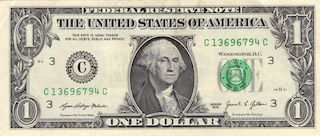
Just last week Chinese authorities published the text of a speech that President Xi gave two years ago, expressing his ambition to make the renminbi a global currency, challenging the dominance of the US dollar.
The speech is not confined to the financial ideas of reserve currencies: rather it’s about contrasting Chinese views about finance with the more permissive Western views. In a speech that may have been made by a religiously devout Presbyterian banker (there were such people in Adam Smith’s time) Xi stressed that the finance sector should serve the real economy and be governed by strong ethical principles. Hutchens quotes extensively from Xi’s speech.
The title of his post – As the West wakes up to the reality of the Epstein class, China plans a global reserve currency – catches Hutchens’ suggestion that the timing of the release of Xi’s speech bears some connection to the release of the Epstein files.
Whether Xi actually wants the renminbi to be a reserve currency is another matter. There is prestige for the country with the reserve currency, and a small financial advantage in reduced transaction costs as the need for an intermediate currency in trade is reduced. (That advantage could be shared with a country selling lots of iron ore to China and importing lots of BYD cars.)
But as Keynes tried to warn Roosevelt and his Treasury Secretary Morgenthau at the Bretton Woods Conference, a country whose currency becomes the world currency loses control of its own money supply. That’s one of the reasons the $US has generally been overvalued, and in world crises has been subject to sudden movements. Both are to the detriment of America’s trade-exposed industries. So long as China has some access to US markets, a weak $US is not in China’s interests.
A regulator’s resurrection
After a long slumber ASIC is back in action as a strong regulator.
One of the Keating government’s economic reforms was to establish the Australian Securities Commission – now the Australian Securities and Investment Commission – in 1991. It was to restore the public’s faith in business and financial markets, following the wild financial times of the late 1980s.

Just resting
ASIC soon got down to business as an effective business regulator. But in this century it seemed to run out of oomph, and chose easy backroom deals with business involving unenforceable promises, rather than doing the hard work of prosecuting errant companies. To the delight of less-than- ethical businesspeople, ASIC was known as a toothless tiger.
Ian Verrender presents a history of ASIC in his post ASIC's remarkable turnaround as the tiger that found its teeth. It wasn’t toothless: it had teeth but didn’t use them, Verrender writes. He leaves open the question whether this was because of managerial incompetence, or because of pressure from the indolent Howard government.
Reform has been a slow process – it is now 7 years since Justice Hayne presented the final report of the commission into misconduct in the finance sector. But reform is in train: Verrender describes how ASIC, with new senior management since 2021, is already onto a number of cases of corporate bad behaviour with a vigour that was absent during its long slumber.