Politics
The coup
They made Ley the scapegoat for the Coalition’s failures.
Sussan Ley had her chance in May last year.
She turned her back on it.
The first Liberal-National split gave her and her supporters the opportunity to go their own way and to build a centre-right party, focussed on re-gaining the ground the Liberal Party has been losing, not just in the last two federal elections, but in almost every election, state and federal, for the last 12 years.
Frayed
It would have been a long shot, but even modest success in the next federal election could have given the party the momentum to regain relevance among those the Coalition has lost.
Instead she tried to re-build the Coalition. In view of the Liberal’s weak electoral outcome the Nationals were bound to have the upper hand, particularly when they had some hard-right allies among the Liberal Party survivors. Ley’s narrow victory in the first ballot confirmed the weakness of her party’s position. Not her weakness, but the weakness of the post-election residue of the Liberal Party.
That irony of her demise is that in her determination to keep the Coalition together she kept deferring to the far right, including some Liberal Party members, who wanted to take both parties down an aggressive, divisive right-wing path.
Her first response to the Bondi murders was statesmanlike and uniting. But the far right pushed her into making the murders an occasion to mount an attack on the government, including a vituperous attack on the foreign minister, and a demand for early recall of Parliament, leading to the Coalition’s disastrous performance in that sitting. These same thugs organized her downfall. Their dishonourable behaviour in their party gives a strong hint of the way they would behave towards to the electorate if they ever formed government.
Ley must have known, as is common in politics, that whoever bore the title “leader” would be the scapegoat if the polls turned against the party. And she must have known that in all sorts of organizations women are put into positions where failure is inevitable. Her effort at keeping the Coalition together was bound to lead to her political downfall. Had she tried to build a new party she might have been able to replicate Menzies’ initiatives in 1944. A small chance of success is better than inevitable failure.
The right-wing group who worked for Ley’s downfall are in two separate but intersecting ideological streams. Many use the term “conservative” to describe them collectively, but they aren’t conservative, because they don’t seek to conserve. Rather they seek to destroy what others have built. The “small government” movement seeks to destroy state capacity. The right-wing populists seek to destroy the democratic institutions, and norms of decency and respect for one another that hold a diverse and a multicultural society together.
Angus Taylor belongs to the first stream, the Reagan-style right. He talks about smaller government, cutting spending, and reducing taxes. During the Coalition’s campaign last year that he outlined his belief that anything the government does is wasteful: the only economic activity that counts is in the private sector.
This is an extreme view in a country that is almost the lowest taxed in the “developed” world, and that is struggling to provide health care, education, physical infrastructure, and public housing – services that the private sector cannot provide, or that they can provide only at very high cost. He has a handful of allies who will go on reciting the supposed need to cut government spending right through to the next election, hoping that lazy journalists don’t ask what services they intend to cut.
The anti-Ley plotters include the second stream, whose politics are most easily described as right-wing populist. In an interview on 730 on the eve of the coup, Alexander Antic, a representative of this stream, was extraordinarily honest about his admiration for Farage’s policies, and he didn’t dismiss the idea of a broad Liberal-National-One Nation Coalition. It’s worth a listen – don’t worry about the factual errors and lies, but focus on the policy message. (The interview runs for 10 minutes from 14:30.)
The issue that brings these streams together is immigration policy. Perhaps, as Melissa Price from Western Australia suggested on the same 730 program, the plotters wanted to move before Ley and her supporters presented an immigration policy crafter by the “moderates”. We have heard Andrew Hastie’s dog whistles about “strangers in our own home”, which hints strongly of a return to a White Australia policy. Others have used the Bondi murders as a chance to vilify Muslim Australians. The right-wing’s silence following the terrorist attack on an Aboriginal protest rally speaks just as strongly as a specific support of the white supremacist movement. When people talk about “clear direction and relentless and courageous focus on our values” without specifying that direction or those values we should be very worried.
They talk about “leadership”, but they have no intention to exercise leadership – bringing the community along to solve its shared problems and to realize its opportunities. Their only interest is to seize office from Labor, which they believe is unfit to hold office.
To understand the risk posed by these men we only need to look at where right wing populism has taken the USA. This mob has destroyed the Liberal Party; if given a chance they would go on to destroy Australia.
Too many “leaders”, too little leadership
Our usual – and flawed – model of leadership
A reminder of an established model of leadership, that clearly separates it from the exercise of authority.
Our disappointment mounts as we hang around waiting for our political “leaders” – Anthony Albanese, David Littleproud, and now Angus Taylor – to show leadership.
It won’t happen. Not because of their personal shortcomings, but because they’re not “leaders”.
Their roles as party ”leaders” are those of chairpeople or presidents, heavily constrained by party politics, opinion polling, and rules of party loyalty. Last year I was at gathering where a former minister put the truth about political constraints on leadership when he said: “We all know what should be done, but we don’t know how to get re-elected if we do it.”
We use that term “leader” far too much, when we’re actually referring to people in positions of authority – the shift supervisor or corporal at the first rung of the ladder, through to the CEO, the general or the prime minister on the top rungs. They have specific responsibilities.
People in positions of authority serve vital functions in carrying out the organization’s mission, and they have a span of executive authority, a span that widens in higher positions. But those spans are limited: some, such as the Reserve Bank’s governor, are set by legislation.
We can turn to any management text to find a definition of the exercise of authority, a definition that covers the activities of directing, planning, organizing, controlling and coordinating – all important organizational functions.
That’s straightforward enough. But what is leadership?
Here’s where it gets difficult, because “leadership” seems to be a “you know what I mean” term. It’s what “leaders” do, isn’t it?
The logical trouble is the circularity of those two undefined terms – “leaders” and “leadership”. To quote Ron Heifetz, Hussein bin Talal Senior Lecturer in Public Leadership, Founding Director of the Center for Public Leadership at Harvard’s Kennedy School:
The area of leadership as a study, a practice, and as a way of intervening in societies or cultures is an immature area. It’s an undisciplined area. We could not even call it a field as yet.
His working definition of leadership has minor variants, but apart from a little refinement it has remained unchanged over the 42 years he has been teaching and consulting on leadership. To paraphrase his term, leadership is the work that mobilizes the resources of a people or organization to build the capacity to solve difficult problems or to seize opportunities.
Note the emphasis on work. It’s work that requires people to adapt, to face up to new realities. It’s not a “leader follower” model because it does not rely on one “leader” with authority to command others, because that work is collective, and because everyone has agency.
Australia’s energy transition is a case in point. There are technical engineering aspects, some of which, such as increasing the energy density of batteries, present challenges, but these can be dealt with in existing authority structures governing research and development. There needs to be regulation in relation to physical planning and pricing, which can be dealt with by bodies such as the Australian Energy Market Operator and the Australian Energy Regulator.
But it’s the adaptive work that requires leadership, because for many our energy transition involves significant disruption. It’s a break in tradition for people who have had well-paid and well-respected jobs as coal miners for several generations, living in well-established and socially cohesive mining communities. In rural communities it changes land uses, and creates a privileged class of land owners fortunate enough to have the right terrain and proximity to transmission lines: they do very well in farming areas where others may be struggling with the seasons and poor commodity prices. Vested interests in the fossil fuel industries find it easy to raise scare campaigns, raising people’s anxieties.
Mobilizing resources to make the necessary adaptive changes – resolving conflicts, easing anxieties, countering lies and misinformation (a very hard task), ensuring that the outcomes are fair and are seen to be fair – involves hard work. It’s particularly hard for politicians in democracies, in office or aspiring to be in office, because we mistrust politicians.
But as Heifetz points out, leadership can be exercised from any position. In fact, for the reasons explained above, those in positions of authority can be the most severely constrained.
That is why people who have gained respect in their public lives can raise issues that serving politicians cannot. Two former prime ministers (Keating and Turnbull) and a former “opposition leader” (Hewson) have been vocal in reminding us about hard realities to which we must adapt – the fragility of the US alliance, the risks of commodity dependence, the need for revenue to match our appetite for public goods, the risks posed by xenophobic right-wing populists.
While people in formal Parliamentary positions – ministers, “shadow ministers”, party “leaders” – are constrained, independent Members of Parliament and even the occasional brave backbencher have more freedom to exercise leadership than party bosses.
The work is not just in raising issues: it’s also in keeping those issues alive and relevant. Here’s where the media, in all its evolving forms, is important. Journalists have a particular moral responsibility because they have a range of positive and negative power over people’s capacity to deal with adaptive change. Scare campaigns – the $100 roast, albatrosses dying in collisions with wind farms – make for catchy headlines. More insidious is the question to a politician “will you rule out a higher tax on gasoline/a carbon price/a ban on gas stoves/and so on?” – designed to constrain politicians’ capacity.
None of this is to say that those in authority cannot exercise leadership: that would be to let our current government off the hook too easily. In the 1960s US President Lyndon Johnson, bearing the burden of southern Democrats’ racist legacy, was able to nurture civil rights movements that pushed the administration into action. In Australia in the 1980s the Hawke-Keating government was able to bring about a massive change in economic policy by encouraging established parties – unions and corporations – to learn for themselves the adaptive work that had to be done, and to help the government bring the wider community with them.
Although it was driven by the same Labor ideals as the Whitlam government, the approach taken by the Hawke-Keating government was radically different. The Whitlam government’s “crash or crash through” approach achieved change through legislation – a tariff reduction, free universities, universal publicly-funded health insurance. But because these achievements were not well-embedded many turned out to be fragile. The Whitlam government had its dedicated supporters, but the adaptive work in the rest of the community had not been done.
Sometimes those in authority take advantage of a temporary change in role as a chance to raise hard issues, as Canadian Prime Minister Carney did at Davos, where he warned that “we are in a rupture, not a transition”. He was out of his role as Canadian Prime Minister: he didn’t have to think about how his statements in that forum would influence the Liberal Party’s vote in Saskatchewan.
Heifetz’s warns about the techniques we use to keep hard issues off the agenda – techniques he describes by the general term “work avoidance”. The Albanese government is adept at work avoidance, as we have seen in its approach to gambling reform (keep it off the legislative program), taxes on the wealthy (make a token move that applies to only a few people), widening wealth inequality (don’t mention it), and defence (keep pretending those submarines are coming). Their skill is exceeded by the rabble of right-wing parties, who pretend we can cut public expenditure substantially without subjecting Australians to US standards of health care, infrastructure, environmental protection, community safety and social security.
Heifetz’s ideas are not hard to grasp. They are laid down in his 1994 book Leadership without easy answers. His 2002 book, Leadership on the line: staying alive through the dangers of leading, co-authored with Marty Linsky, is a practical guide to the hard work of exercising leadership. Then there is his 2009 book The practice of adaptive leadership: tools and tactics for changing your organization and the world, co-authored with Alexander Grashow and Marty Linsky, another guide to hands-on leadership. The only difficulty in understanding his work is that it challenges our conditioned thinking about leadership. In a minor way that conceptual shift requires adaptive work.
His framework, including a thorough description of the difference between the exercise of authority (positional) and leadership (can be exercised from any position) is in a 45-minute presentation at the 2016 Global Leadership Forum.
On these roundups I remind people of Heifetz’s work every year or so, particularly at times like now when there are too many people with the title “leader” and too little hard adaptive work being done.
The Herzog visit – an unwanted distraction
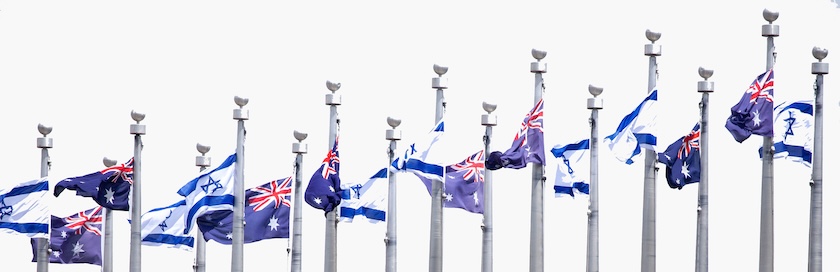
What do Israeli flags have to do with grieving Australians?
Isaac Herzog’s visit was an ill-considered response to the Bondi murders.
In Sydney on Monday thousands of people – perhaps as many as 30 000 – turned out to protest against the visit of Israeli President Isaac Herzog.
Some would have been protesting at the Albanese government’s having issued an invitation to Herzog, an invitation we learn from Malcolm Turnbull was recommended to the Australian government by the Zionist Federation of Australia – Turnbull says Herzog visit raises questions around social cohesion on Radio National Breakfast.
If the purpose was to offer solace and comfort to the direct and indirect victims of the Bondi killings, why was the invitation not made to a respected person – a rabbi perhaps – with no connection to the murderous and brutal Netanyahu government? On Radio National ‘s Religion and Ethics Report Andrew West interviews two Jewish lawyers, Josh Bornstein and Jeremy Leibler, who have very different views on the appropriateness of Herzog’s visit: Has the Israeli President's visit brought comfort or civil unrest?. (Leibler makes some extraordinary claims about the behaviour of Palestinian Australians.)
And many would have turned up at the demonstration to express sympathy and support for the Palestinian people, regardless of Herzog’s presence in Australia.
But the demonstration turned violent. It is evident from video clips that some police were engaged in unnecessary aggression against people who were already immobilised, and in grossly insensitive behaviour towards people praying. That is not to deny the possibility there was of violent behaviour by protestors, but even if there were such violence the police behaviour on display was inexcusable: two wrongs don’t make a right.
Much has been written, and stated, about that outbreak of violence. Andrew Brown offers a first-hand account on Michael West Media: This was planned, and Chris Minns owns it. The specific police practice of “kettling” – a practice that seems to be designed to result in physical confrontation – is covered in a Radio National PM interview with existing and former senior New South Wales police. The legality of police action is outlined in a Conversation contribution by Simon Bronitt of the University of Sydney: Was the violent Sydney protest avoidable, and what can police and demonstrators learn? And the constitutionality of the New South Wales legislation is brought into question in a Radio National interview with barrister Andrew Whealy, of the Centre for Public Integrity.
Much more will be said and written about police powers, free speech, and the right to protest. But one immediate conclusion is that in the media these issues have become the story, overshadowing the brutality inflicted on the people of Palestine, whose suffering under Israeli aggression is of a completely different scale to the behaviour of a few thugs in the New South Wales police force. That focus on police behaviour has also distracted attention from what should have been an occasion of mourning and healing for the Jewish community and other Australians distressed by the Bondi murders.
It appears from media reports that our government has used the Herzog visit as an opportunity to object to Israel’s decision to expand control of the West Bank: Albanese raises Australian’s death in Gaza with Herzog after condemning Israeli settlers by Matthew Knott and Nick Newling in The Sydney Morning Herald. Something has been salvaged from an ill-advised invitation.
Antony Green’s reflections
An extraordinarily skilled psephologist shares his political insights
One certainty about future elections in Australia is that it won’t be Antony Green who gives a running interpretation of progress and announces the results. But others will surely take up the task, and build on what Green has established.
The National Account has a short (13 minute) clip Antony Green on 36 Years of Elections and the Biggest Lie About Preferences starting with his accounts of the more memorable election nights. He also describes how over that time, thanks to his always-improving software and cooperation from the AEC, the timeliness and accuracy of the count has improved. But at the same time, for staffing reasons he explains, the growing volume of pre-poll voting has been making the task harder.
When asked to comment on the One Nation surge, he reminds us that the party’s vote is concentrated in rural Queensland and New South Wales. On present figures if it were to pick op seats it would probably do so from the National Party, and perhaps one or two from Labor. Only in Victoria is the National party in a strong electoral position. (Barnaby won the only safe seat in New South Wales.)
He makes brief comments on state elections to come this year – South Australia on March 14 and Victoria on November 26. Because of instability in the federal Liberal and National parties, both will be closely watched for national implications.
A little polling data reveals the importance of those elections.
Stories are circulating about a Liberal wipeout in South Australia: these seem to be based on a poll last October that gave Labor a 66:34 TPP lead. Also criminal charges and convictions against two Liberal Party MPs – who have subsequently left the party – have not boosted its electoral appeal. William Bowe’s Poll Bludger reports on a more recent poll by Fox & Hedgehog, taken in early February, that gives Labor a more modest 61:39 TPP lead. His Bludger Track, which takes in more data but is an indicator of federal voting intention, has Labor on a 58:42 TPP lead.
The Fox & Hedgehog poll puts the Liberals and One Nation close to equal, at 19 percent and 20 percent respectively. (South Australia enjoys the good fortune of not having to carry the political deadweight of a National Party.)
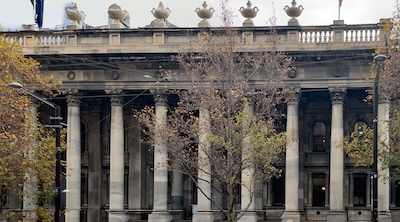
A Labor stronghold?
Strategists in the federal Liberal Party will be particularly interested in the South Australian results, because it’s a test of the popularity of the party in urban regions. Of the state’s 1.8 million people, 1.4 million (78 percent) live in Adelaide. The Liberals hold only a handful of Adelaide seats, in the seaside suburbs and the prosperous eastern suburbs, all on low margins. These are the type of seats it has lost federally to the Teals. If the party loses support in Adelaide it will have a message for those who have been trying to move the party to the hard right. (William Bowe has prepared an election guide for poll watchers.)
The Victorian election is later (November 28). Green points out that Labor has been in office for a long time: it’s looking tired. But Bowe’s Bludger Track gives Labor a 53:47 TPP lead, and the Liberals would have to pick up many seats in Melbourne’s low- and middle-income regions to win office.
Green’s other observation is about preferential voting. Those who understand preferential voting – probably including readers of these roundups – know that the distribution of preferences is the voter’s choice. Green points out, however, that many people don’t understand this, and pay too much attention to party preference deals. These deals relate mainly to how-to-vote cards which carry no authority, but many journalists take these deals too seriously. There does seem to be an effect on voters’ behaviour when parties do a preference deal, but it’s minor.