Other politics
Hope gives way to nostalgia
Figures from the ABS confirm that Australians are doing reasonably well.
Unemployment is lower than it has been for many years, the bout of inflation following excess fiscal stimulation in the post-Covid period has been beaten, and economic growth is slowly recovering. We have a housing problem, but surely people realize that it takes time for housing supply to catch up with demand.
But to quote from the 2025 ANU Election Monitoring Series – Erosion of hope: Social and financial wellbeing and the relationship with the political – “Australians are increasingly pessimistic about the future and life satisfaction has dropped to its lowest level since COVID-19 lockdowns”.
You can read a short summary of the study in the ANU Reporter, which includes a 90-second clip of the report’s author, Nicholas Biddle, explaining its findings.
The study is clearly relevant to the choices we make in the coming election, but it’s not about whether we vote Liberal/Labor/Teal/Green: that’s a job for the pollsters. Rather the study is about the values and beliefs that guide our political choices, and longer-term changes in these choices.
It confirms what these roundups have pointed out about journalists’ lazy reference to a “cost of living crisis”. Around 30 percent of Australians are finding it really hard to make ends meet: another 30 percent or so have had to make minor adjustments such as postponing major purchases, and some are doing very well. There is not some “crisis” – these problems have come on slowly – and most people don’t have any more than the normal challenges in coping with the cost of living.
An important but easily-overlooked finding about economic conditions is that people are more concerned about the way people on the whole are coping than they are about their own conditions. This is a pretty good indicator that the politics of “what’s in it for me?”, the idea underpinning neoliberalism, is not resonating with Australians, particularly young Australians.
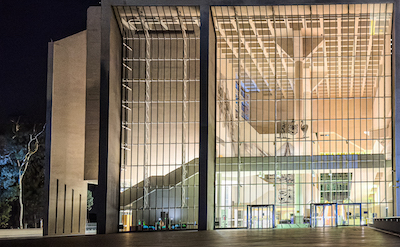
We still trust the judiciary – somewhat (High Court)
The study suggests that our main economic problem is one of social justice, particularly towards the young who have been increasingly excluded from housing. This isn’t just about the supply-demand arithmetic of housing markets: it’s also about intergenerational justice. Similarly young people feel that their concerns about the environment, particularly climate change, are being ignored. Again it’s not about whether Labor or any other party is doing enough: rather it’s about young people’s feeling that they have no voice or agency in decisions that affect them – decisions that have long-term consequences for younger people, made by older people who have over-exploited the planet’s resources.
A major theme in the study is growing mistrust in institutions. Two-thirds of Australians mistrust the federal government. The public service and state governments score a little better. People were asked about their trust in seven key institutions: only the judiciary scores more than 50 percent (“trust somewhat” or “trust completely”), but the general pattern is one of declining trust in all institutions. Social media score last place, with 20 percent trust, but political parties and religious institutions also score poorly – 33 percent and 32 percent respectively.
To quote from the study’s abstract:
Economic perceptions are strongly associated with political attitudes. We find that national economic assessments in particular are stronger predictors of confidence in government, satisfaction with democracy, and populist sentiment. Those who perceive the national economy as worsening are significantly less satisfied with democracy, more distrustful of government institutions, and more receptive to populist narratives.
Importantly, Australians who believe life was better 50 years ago and will worsen over the next 50 years exhibit lower trust in government and stronger populist attitudes. Conversely, younger Australians express greater optimism but remain less politically engaged.
The finding that those who believe the national economy is worsening are able to be swayed by populist narratives does much to explain Trump’s talking down the economy in his campaign and Dutton’s similar approach in our coming election.
The finding that many people believe life was better 50 years ago beggars belief when one thinks about the conditions half a century ago – lower life expectancy, poorer housing, lower levels of education, higher rates of crime, institutional gender and race discrimination – to name a few.
Perhaps what older Australians are missing is the optimism of Australia in the 1970s, and the belief that through collective action we could make progress on improving our own and others’ conditions. That was before the dead hand of neoliberalism and the “small government” movement squashed our hopes of building a better commonwealth.
Guidance for our coming election
The study’s relevance for the coming election is summarised in five recommendations, aimed at restoring trust in institutions, countering populist movements, and more specifically addressing housing affordability and bridging generational divisions – not only in economic conditions but also in political attitudes.
If our pre-election debates can address these longer-term issues, that would be refreshing. It would certainly be better than the opposition’s Trumpian agenda “are you better off now than you were when Labor was first elected?”
At least one journalist, Patricia Karvelas, has read Biddle’s study: she has a summary of it on the ABC website. If enough of her journalist colleagues read it we may hear less partisan talk about a “cost of living crisis”, supposedly brought on by an incompetent Labor government, and more about the political values and beliefs and the social injustices that few politicians want to talk about.
Learning how to do democracy
Visitors to Parliament House in Canberra who come across groups of schoolchildren on their pilgrimages to the chambers of our democracy can be left asking themselves how much of it has really sunk in. They may understand the difference between the Senate and the House of Representatives – important knowledge – but how well do they connect this to their other learning?
Scott Arthurson, a politics student at the University of Melbourne, has a short contribution in Open Forum – Lessons in democracy – about the ways school students can learn about the basics of democracy in their development as responsible citizens.
Students should learn the specifics of democracy – suffrage, political rights, separation of powers, and so on. They should learn that democracy is about far more than voting. They should be able to integrate this knowledge with what they learn in history, including our own rich Australian history.
These are all important, but he’s not satisfied that they’re adequate. They need to learn the behaviours that allow people to get along with one another, and to make decisions for the collective good. School is a great place to start he writes:
[Their school experience] should build empathy for the experiences of others; the ability to work with diverse people on an equal footing to pursue shared goals; respect without adulation for knowledge; and a willingness to question both authority and our own presumptions.